
[EN] A Quantum of the Fisher Information Derivation
Published:
This post elaborates a derivation of Equation (2.20) on page 53 of Bayesian Data Analysis Third Edition.
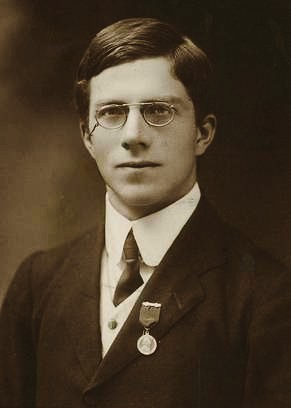
\(\pmb{\text{Figure 1}}\): Sir Ronald Aylmer Fisher (17 February 1890 - 29 July 1962). One of his many great contributions to Statistics is Fisher Information. Image taken from Wikipedia, some rights reserved.
Concretely, we want to show the derivation \(J(\theta)\), the Fisher Information, from
\[\begin{equation} J(\theta) = \text{E}\left( \left( \frac{d \log \Pr(y \mid \theta )}{d\theta} \right)^2 \, \middle| \, \theta \right) \tag{1}\label{eq:start-point} \end{equation}\]to
\[\begin{equation} J(\theta) = - \text{E}\left( \frac{d^2 \log \Pr(y \mid \theta)}{d\theta^2} \, \middle| \, \theta \right). \tag{2}\label{eq:end-point} \end{equation}\]The idea of this derivation comes from a lecture note by John Duchi from Stanford Statistics class. The difference between this post and the lecture note is that the lecture note deals with multi-variables which employs second derivatives for multi-values (Hessian matrix); on the other hand, this post deals with a single variable and employs a second derivative for just one value.
Let’s start with computing \(\begin{equation} \text{E} \left( \frac{d \log \Pr(y \mid \theta)}{d\theta} \, \middle| \, \theta \right) \end{equation}\).
\[\require{cancel} \begin{align} \text{E}\left( \frac{d \log \Pr(y \mid \theta)}{d\theta} \, \middle| \, \theta \right) &= \int \frac{d \log \Pr(y \mid \theta)}{d\theta} \Pr(y \mid \theta) d\theta && \text{definition of expectation} \tag{3}\label{eq:dlog-1} \\ &= \int \frac{d \Pr(y \mid \theta)}{d\theta} \frac{1}{\Pr(y \mid \theta)} \; \Pr(y \mid \theta) d\theta && \text{derivation of }\frac{d \log \Pr(y \mid \theta)}{d\theta} \tag{4}\label{eq:dlog-2} \\ &= \int \frac{d \Pr(y \mid \theta)}{d\theta} \frac{1}{\cancel{\Pr(y \mid \theta)}} \; \cancel{\Pr(y \mid \theta)} d\theta \tag{5}\label{eq:dlog-3} \\ &= \int \frac{d \Pr(y \mid \theta)}{d\theta} d\theta \tag{6}\label{eq:dlog-4} \\ &= \frac{d}{d\theta} \int \Pr(y \mid \theta) d\theta && \text{exchange }\frac{d}{d\theta} \text{ and } \int \tag{7}\label{eq:dlog-5} \\ &= \frac{d}{d\theta} \underbrace{\int \Pr(y \mid \theta) d\theta}_{1} && \text{property of a pdf}\tag{8}\label{eq:dlog-6} \\ &= \frac{d}{d\theta} (1) \tag{9}\label{eq:dlog-7} \\ &= 0. \tag{10}\label{eq:dlog-8} \end{align}\]Consider Equation \eqref{eq:dlog-5}, we shall utilize this exchangeability between integral and differentiation again later.
Equation \eqref{eq:dlog-2} states that
\[\begin{equation} \frac{d \log \Pr(y \mid \theta)}{d\theta} = \underbrace{\frac{1}{\Pr(y \mid \theta)}}_{u} \underbrace{\frac{d \Pr(y \mid \theta)}{d\theta}}_{v}. \tag{11}\label{eq:first-order-derivation} \end{equation}\]Therefore,
\[\begin{align} \frac{d^2 \log \Pr(y \mid \theta)}{d\theta^2} &= \underbrace{- \frac{1}{\Pr( y \mid \theta )^2} \frac{d \Pr(y \mid \theta)}{d\theta}}_{u^{\prime}} \underbrace{\frac{d \Pr(y \mid \theta)}{d\theta}}_{v} + \underbrace{\frac{1}{\Pr(y \mid \theta)}}_{u} \underbrace{\frac{d^2 \Pr(y \mid \theta)}{d\theta^2}}_{v^{\prime}} && \text{based on } u^{\prime} v + u v^{\prime} \tag{12}\label{eq:second-order-1} \\ &= \frac{d^2 \Pr(y \mid \theta)}{d\theta^2} \frac{1}{\Pr(y \mid \theta)} - \left( \frac{d\Pr(y \mid \theta)}{d\theta} \frac{1}{\Pr(y \mid \theta)} \right) \left( \frac{d\Pr(y \mid \theta)}{d\theta} \frac{1}{\Pr(y \mid \theta)} \right) && \text{just rearranging} \tag{13}\label{eq:second-order-2} \\ &= \frac{d^2 \Pr(y \mid \theta)}{d\theta^2} \frac{1}{\Pr(y \mid \theta)} - \left( \frac{d \log \Pr( y \mid \theta)}{d\theta} \right) \left( \frac{d \log \Pr( y \mid \theta)}{d\theta} \right) && \text{based on Equation }\eqref{eq:first-order-derivation} \tag{14}\label{eq:second-order-3} \\ &= \frac{d^2 \Pr(y \mid \theta)}{d\theta^2} \frac{1}{\Pr(y \mid \theta)} - \left( \frac{d \log \Pr( y \mid \theta)}{d\theta} \right)^{2} \tag{15}\label{eq:second-order-4} \end{align}\]From Equation \eqref{eq:second-order-4} we obtain
\[\begin{align} \frac{d^2 \log \Pr(y \mid \theta)}{d\theta^2} = \frac{d^2 \Pr(y \mid \theta)}{d\theta^2} \frac{1}{\Pr(y \mid \theta)} - \left( \frac{d \log \Pr( y \mid \theta)}{d\theta} \right)^{2} &\Longleftrightarrow \left( \frac{d \log \Pr( y \mid \theta)}{d\theta} \right)^{2} = - \frac{d^2 \log \Pr(y \mid \theta)}{d\theta^2} + \frac{d^2 \Pr(y \mid \theta)}{d\theta^2} \frac{1}{\Pr(y \mid \theta)} \tag{16}\label{eq:second-order-last} \end{align}\]Now we are ready to calculate \(\begin{equation} \text{E}\left( \left( \frac{d \log \Pr(y \mid \theta )}{d\theta} \right)^2 \, \middle| \, \theta \right). \end{equation}\)
\[\require{cancel} \begin{align} \text{E}\left( \left( \frac{d \log \Pr(y \mid \theta )}{d\theta} \right)^2 \, \middle| \, \theta \right) &= \int \left( \frac{d \log \Pr(y \mid \theta )}{d\theta} \right)^2 \Pr(y \mid \theta) d\theta && \text{by definition} \tag{17}\label{eq:final-showdown-1}\\ &= \int \left( - \frac{d^2 \log \Pr(y \mid \theta)}{d\theta^2} + \frac{d^2 \Pr(y \mid \theta)}{d\theta^2} \frac{1}{\Pr(y \mid \theta)} \right) \Pr(y \mid \theta) d\theta && \text{by Equation }\eqref{eq:second-order-last} \tag{18}\label{eq:final-showdown-2}\\ &= \int \left( - \frac{d^2 \log \Pr(y \mid \theta)}{d\theta^2} \right) \Pr(y \mid \theta) d\theta + \int \frac{d^2 \Pr(y \mid \theta)}{d\theta^2} \frac{1}{\Pr(y \mid \theta)} \Pr(y \mid \theta) d\theta && \text{by distributive} \tag{19}\label{eq:final-showdown-3}\\ &= \int \left( - \frac{d^2 \log \Pr(y \mid \theta)}{d\theta^2} \right) \Pr(y \mid \theta) d\theta + \int \frac{d^2 \Pr(y \mid \theta)}{d\theta^2} \frac{1}{\cancel{\Pr(y \mid \theta)}} \cancel{\Pr(y \mid \theta)} d\theta \tag{20}\label{eq:final-showdown-4}\\ &= \int \left( - \frac{d^2 \log \Pr(y \mid \theta)}{d\theta^2} \right) \Pr(y \mid \theta) d\theta + \int \frac{d^2 \Pr(y \mid \theta)}{d\theta^2} d\theta \tag{21}\label{eq:final-showdown-5}\\ &= \int \left( - \frac{d^2 \log \Pr(y \mid \theta)}{d\theta^2} \right) \Pr(y \mid \theta) d\theta + \frac{d^2}{d\theta^2} \left( \int \Pr(y \mid \theta) d\theta \right) && \text{by exchangeability again} \tag{22}\label{eq:final-showdown-6}\\ &= \int \left( - \frac{d^2 \log \Pr(y \mid \theta)}{d\theta^2} \right) \Pr(y \mid \theta) d\theta + \underbrace{\frac{d^2}{d\theta^2} \left( \int \Pr(y \mid \theta) d\theta \right)}_{0} && \text{similar to Equation }\eqref{eq:dlog-8} \tag{23}\label{eq:final-showdown-7}\\ &= \int \left( - \frac{d^2 \log \Pr(y \mid \theta)}{d\theta^2} \right) \Pr(y \mid \theta) d\theta \tag{24}\label{eq:final-showdown-8}\\ &= - \int \left( \frac{d^2 \log \Pr(y \mid \theta)}{d\theta^2} \right) \Pr(y \mid \theta) d\theta \tag{25}\label{eq:final-showdown-9}\\ &= - \text{E}\left( \frac{d^2 \log \Pr(y \mid \theta)}{d\theta^2} \, \middle| \, \theta \right). && \text{by definition} \tag{26}\label{eq:final-showdown-10} \end{align}\]At last, we have finally shown that
\[\begin{equation} J(\theta) = \text{E}\left( \left( \frac{d \log \Pr(y \mid \theta )}{d\theta} \right)^2 \, \middle| \, \theta \right) = - \text{E}\left( \frac{d^2 \log \Pr(y \mid \theta)}{d\theta^2} \, \middle| \, \theta \right) \end{equation}\]as it is explained by Equation (2.20) on page 53 of the book.